
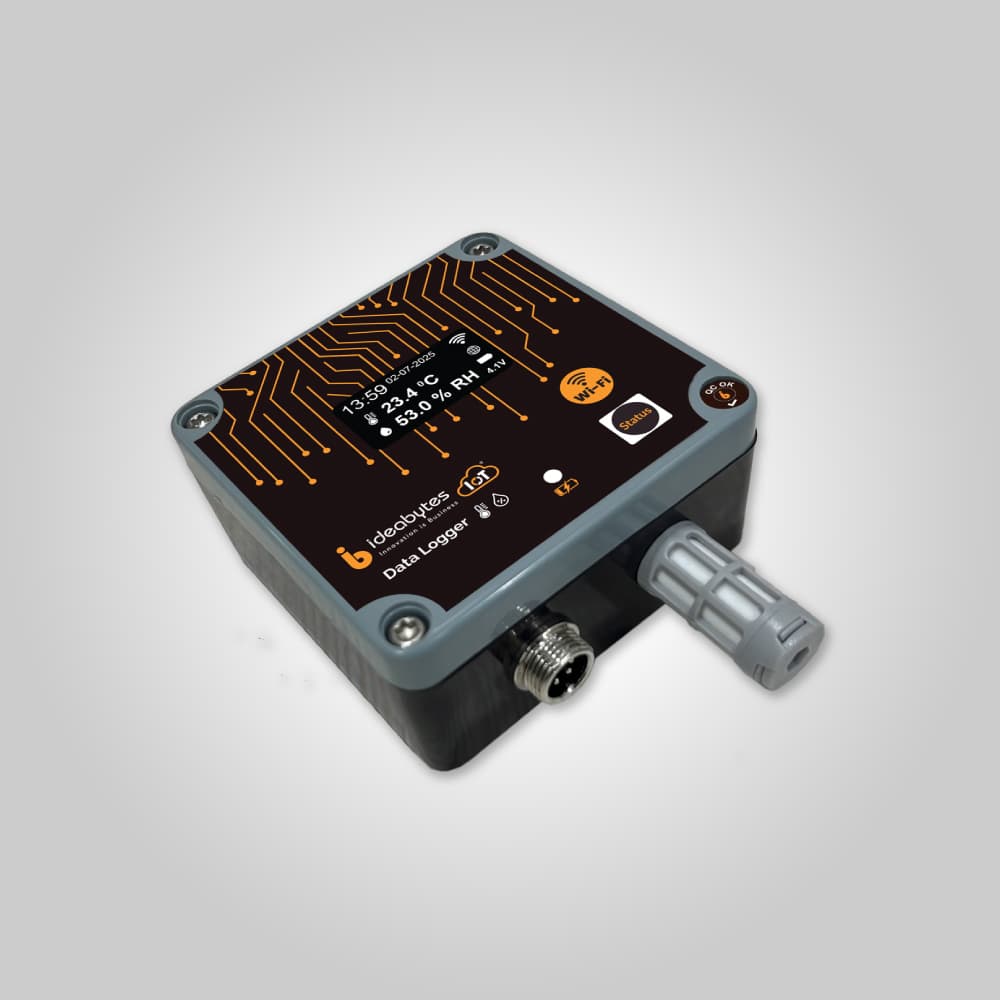
Temperature & Humidity Data Logger
IBI-WTH50 | Wi-Fi Built-In Temperature & Humidity Data Logger
Measuring Range from 0°C to +50°C | Humidity from 0% RH to 100% RH
- •Wi-Fi 802.11 b/g/n 2.4 GHz Connectivity
- •± 0.5°C (-10°C to +50°C) Accuracy
Temperature monitoring
A server room temperature monitor measures the air temperature and humidity at the racks, records it continuously and alerts IT staff the moment cooling fails, before servers throttle or shut down. It is used in office server rooms, hospital and bank IT rooms, telecom and UPS rooms, edge sites and data centres. Ideabytes IoT supplies Ethernet temperature and humidity loggers that plug into the LAN with no Wi-Fi dependency, Wi-Fi models for smaller rooms, dual-channel units for rack inlet and outlet, and an edge gateway that can drive a NOC display. All report to one cloud dashboard with SMS and app alerts.
Showing 3 products
Temperature & Humidity Data Logger
Measuring Range from 0°C to +50°C | Humidity from 0% RH to 100% RH
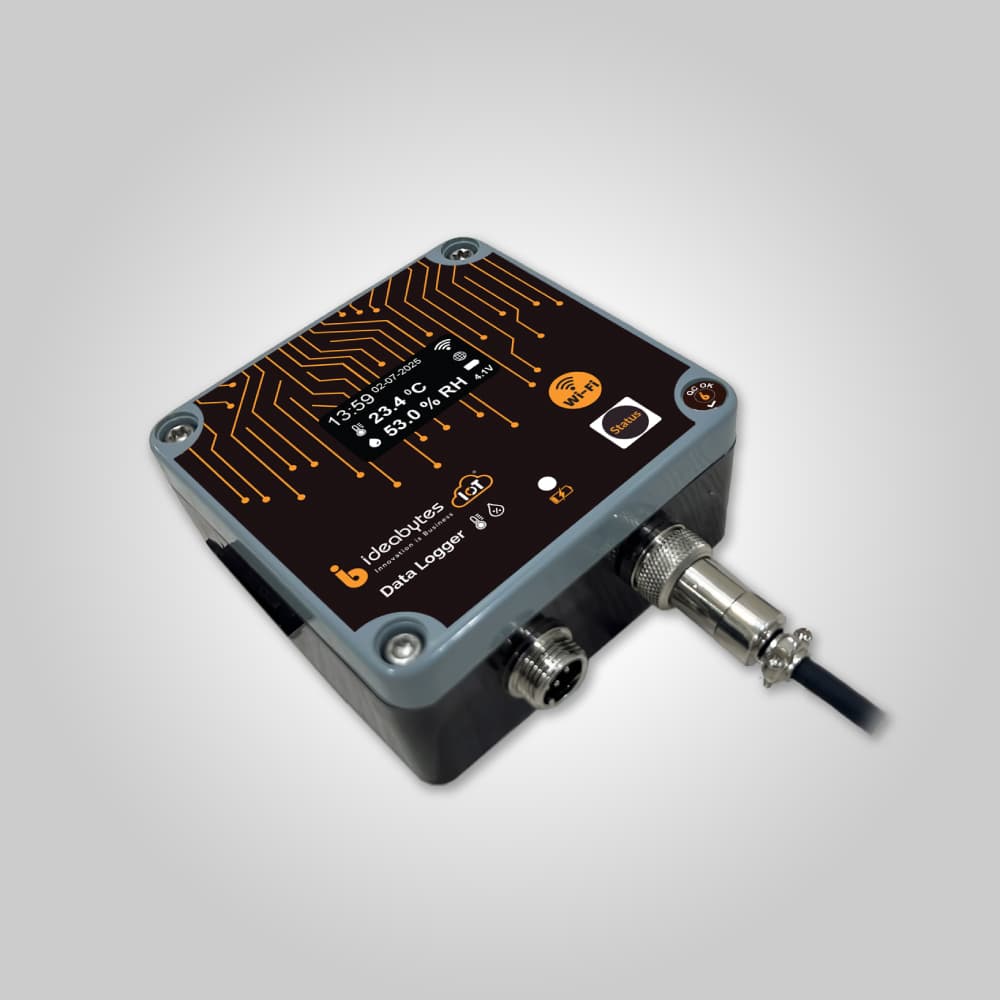
Temperature & Humidity Data Logger
Measuring Range from -40°C to +120°C | Humidity from 0% RH to 100% RH (Condensing)
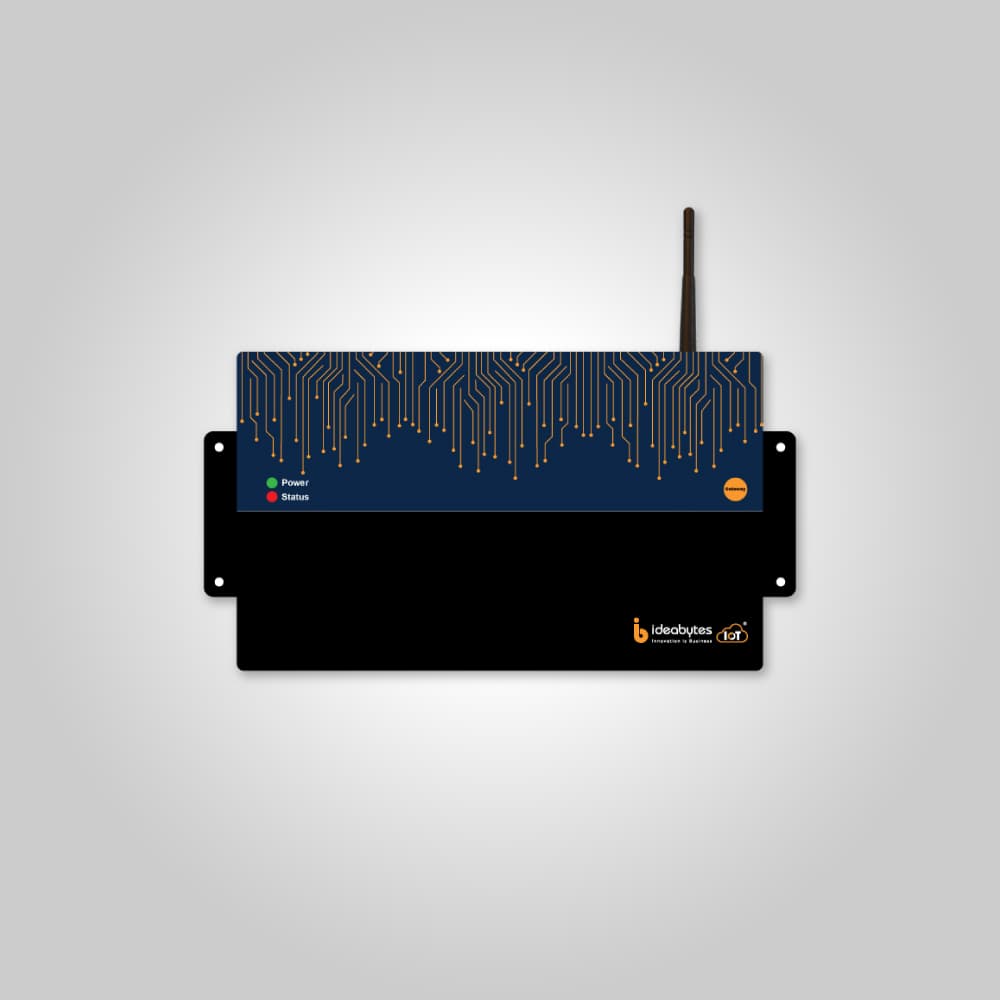
Gateway
Android Industrial IoT Gateway with HDMI Out (Configuration Charges additional)
The most widely used reference is the ASHRAE thermal guideline for data processing environments, which recommends an air inlet temperature of about 18 °C to 27 °C for most IT equipment, with humidity kept within a dew point band and below roughly 60% relative humidity. These are guidance figures, not a certification, and your equipment vendors may specify their own limits. Many small server rooms in India are simply run as cold as the AC allows, which wastes energy without adding protection.
What matters most is measuring at the right place. The temperature at the server intake is what the equipment sees; the reading on the AC remote or a wall thermostat is not. A room that feels cool at the door can still have racks drawing in air several degrees warmer at the top, and it is those inlets that decide whether a server throttles or shuts down.
In a room with a hot-aisle and cold-aisle layout, place sensors in the cold aisle at the front of the racks, ideally at the middle and top of the most heavily loaded rack, because warm air recirculates over the top. A sensor in the hot aisle behind the racks shows how hard the equipment is working and helps confirm that blanking panels and containment are doing their job. Add a probe near each AC return so that a failing unit shows up as a rising trend before the whole room warms.
The IBI-ETD120 dual-channel logger measures two points from one device, for example rack inlet and rack outlet, with external probes rated from -50 °C to +120 °C.
IT teams often do not allow new Wi-Fi devices near core infrastructure, and a monitoring device that relies on the same network it is protecting is not ideal. Ideabytes Ethernet loggers connect through a standard RJ45 10/100 LAN port on a dedicated or management VLAN. The IBI-ETH50 has a built-in temperature and humidity sensor for rooms held between 0 °C and 50 °C; the IBI-ETH120 and IBI-ET120 use external probes that can be routed to a rack. Each logger has a display, internal memory and a battery backup, so it keeps recording during a network or power interruption.
For smaller rooms where a LAN port is not free, the IBI-WTH50 and IBI-WTH120 Wi-Fi models do the same job over 2.4 GHz Wi-Fi.
Alerts must reach the people who own uptime. On the Ideabytes platform each sensor has its own high and low limits and its own recipient list, so an overheating server room sends SMS and app alerts straight to the IT on-call engineer, then to the IT manager if it is not acknowledged. The alarm log records who acknowledged each alert and what action was taken.
Larger sites can put the live dashboard on a wall screen in the NOC or IT office using the IBI-AGW edge gateway, which has HDMI output and dashboard, map and list views. Trend reports make it easy to spot an AC unit that is slowly losing capacity and to plan maintenance before summer.
Humidity is the second half of the picture. Very dry air increases the risk of electrostatic discharge, while high humidity, especially during the monsoon or after an AC failure, can lead to condensation on cold surfaces. A split AC drain that blocks or leaks is a common cause of water damage in Indian server rooms. Temperature and humidity loggers such as the IBI-ETH50, IBI-ETH120, IBI-WTH50 and IBI-WTH120 record relative humidity with an accuracy of plus or minus 2% RH, so you can set alerts on both parameters and see condensation risk developing.
Many organisations do not have a data centre; they have a converted cabin with two racks, a UPS and one or two split ACs. These rooms are the most vulnerable: no redundancy, no building management system and nobody on site at night or on Sundays. A single Ethernet or Wi-Fi temperature and humidity logger with SMS alerts is often enough to prevent a weekend outage. Hospitals, banks, schools and factories with HIS, core banking or ERP servers on site are typical users.
Records also help with ISO 27001 audits, where environmental controls for equipment protection are part of the physical security controls. Treat the Ideabytes reports as evidence for those controls rather than as a certification in themselves.
Cost depends on the number of rooms and measuring points, Ethernet or Wi-Fi connectivity, whether you need humidity and dual-channel probes, the edge gateway for a NOC display and the software plan. A small office server room can often be covered by one logger. Ideabytes IoT manufactures in India and is registered on GeM; tell us about your rooms and racks for a quotation.
ASHRAE guidance recommends an air inlet temperature of about 18 °C to 27 °C for most IT equipment, with humidity below roughly 60% RH and within a dew point band. Treat these as guidance and check your equipment vendors’ limits. Measure at the server inlet rather than at the AC or wall thermostat.
Place it in the cold aisle at the front of the most heavily loaded rack, ideally at the top, where recirculated warm air shows up first. Add a second sensor behind the rack or near the AC return to monitor cooling performance. A dual-channel logger such as the IBI-ETD120 covers both from one device.
An Ethernet logger plugs into a LAN port, so it needs no Wi-Fi access point and can sit on a management VLAN that IT controls. Many IT policies do not allow new wireless devices near core infrastructure. Wi-Fi models remain a good choice for small rooms without a free LAN port.
You choose. Each logger has its own limits and recipient list, so alerts can go by SMS and app notification directly to the IT on-call engineer and then to the IT manager, rather than to facilities staff. Every alert, acknowledgement and action is saved in the alarm log.
It depends on the number of rooms and points, Ethernet or Wi-Fi, temperature only or temperature and humidity, dual-channel probes, an optional edge gateway for a NOC display and the software plan. A small office server room often needs just one logger. Contact us with your room details for a quotation.
Yes. Ideabytes IoT is registered on the Government e-Marketplace, so government offices, hospitals and PSUs can procure server room monitoring loggers through GeM. Private buyers receive a GST invoice with the HSN code for each item, and calibration certificates are available on request.