
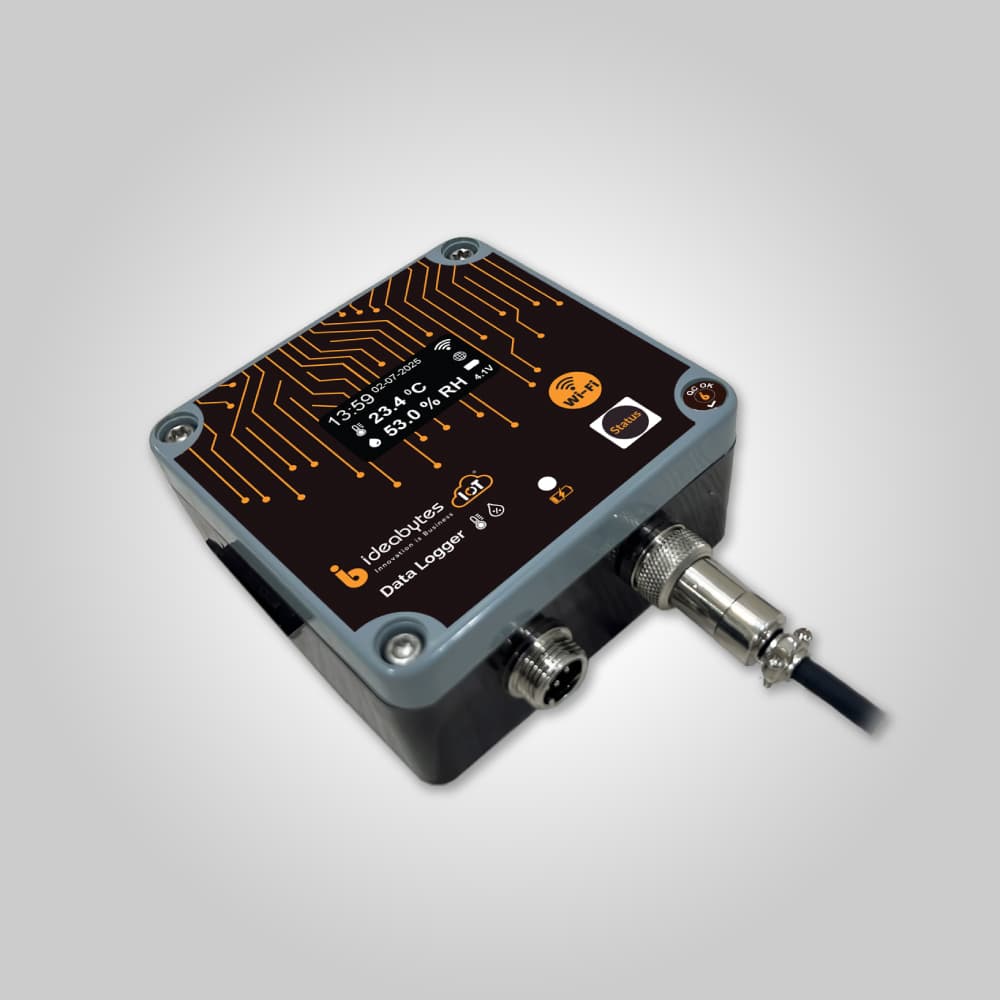
Temperature & Humidity Data Logger
IBI-WTH120 | Wi-Fi Temperature & Humidity Data Logger
Measuring Range from -40°C to +120°C | Humidity from 0% RH to 100% RH (Condensing)
- •Wi-Fi 802.11 b/g/n 2.4 GHz Connectivity
- •± 0.5°C (-10°C to +50°C) Accuracy
WHO GDP / Revised Schedule M
A standard operating procedure (SOP) for temperature and humidity monitoring in the pharmaceutical industry defines how storage areas are mapped, where sensors go, how often readings are taken, which alarm limits apply, how excursions are handled and how records are kept. WHO GDP, EU GDP and India's Revised Schedule M all expect such an SOP, backed by calibrated and continuous monitoring. This page is for QA heads, warehouse managers and validation engineers at pharma plants, distributors and 3PLs. It sets out what the SOP must cover, the storage classes to log, and how Ideabytes Wi-Fi, 4G, Ethernet and offline loggers replace twice-daily manual readings.
| Storage condition | Temperature range | Typical humidity expectation | What to log |
|---|---|---|---|
| Controlled room temperature | 20 to 25 °C (USP), with brief excursions allowed as the label or pharmacopoeia permits | Commonly 60 % RH or below where the label says "store in a dry place" | Continuous temperature and RH at mapped hot and cold spots; monthly MKT |
| "Do not store above 30 °C" or "above 25 °C" | Up to the labelled limit | Per label and SOP; monsoon months need closer watch in India | Temperature and RH; seasonal mapping for summer and monsoon |
| Cool | 8 to 15 °C | Per label; watch for condensation on cartons | Continuous temperature; RH where packaging or labels are at risk |
| Refrigerated | 2 to 8 °C | Not usually specified | Continuous temperature with high and low alarms; door and power events |
| Frozen | -25 to -15 °C | Not applicable | Continuous temperature; alarms around defrost cycles and power failure |
| Ultra-low | -60 °C and below (for example -80 to -60 °C) | Not applicable | PT100 probe temperature; compressor and power-failure alarms |
Inspectors read the SOP first and then check that the site follows it. A pharma warehouse temperature and humidity SOP that survives an audit usually covers the following. Ideabytes can share a template SOP on request that you adapt to your site and approve through your own document control.
Revised Schedule M, notified by the Ministry of Health and Family Welfare in December 2023, brings India's GMP rules closer to WHO GMP. It introduces a pharmaceutical quality system, quality risk management, qualification of equipment and utilities, and validation of computerised systems. Compliance dates were phased for larger manufacturers and for MSMEs, as notified; check the latest notification for the date that applies to your licence.
For storage areas the practical effect is clear. Warehouses and stores must be qualified, storage conditions must be monitored with calibrated instruments, records must be reliable and reviewable, and any computerised monitoring system must be validated. A manual register filled twice a day is increasingly hard to defend under these expectations.
WHO good storage and distribution practices and the EU GDP guidelines set similar expectations for anyone who holds or moves medicines. Storage areas are mapped before use, monitoring devices sit where mapping shows the extremes, devices are calibrated at defined intervals, alarms warn of excursions in time to act, and records are kept and reviewed. Transport routes and vehicles are qualified too, with monitoring during transit where products are temperature-sensitive.
EU GMP Annex 15 adds the qualification and validation framework behind mapping and monitoring systems. Indian exporters to regulated markets meet all three sets of expectations, so a single SOP written to the strictest of them is usually the most efficient approach.
Manual logs record two moments a day and miss everything between them: the night-time chiller trip, the weekend power cut, the dock door left open during unloading. They invite transcription errors and back-filled entries, and they cannot raise an alarm. Continuous monitoring closes each of these gaps.
Ideabytes loggers record at a configurable interval, 15 minutes by default, and send live alerts and app push notifications, with optional SMS, when a limit is crossed. Scheduled daily, weekly or monthly reports arrive without anyone compiling them, and the platform calculates MKT for temperature, which is the value an excursion impact assessment relies on. Audit trail, alarm logs and CAPA records sit alongside the data.
Set two levels. Alert limits sit inside the labelled range and warn staff that conditions are drifting, so they can act before product is at risk. Action limits match the labelled range and trigger the excursion procedure. Add a short alarm delay where door openings cause brief spikes, and justify it in the SOP rather than widening the limits.
Name who receives each alarm, by shift, and who is next if nobody acknowledges within a set time. When an excursion occurs, record its start, end, peak value and duration, quarantine affected stock, and assess the impact using MKT and the manufacturer's stability data before release. Close the loop with a deviation and, where the cause is systemic, a CAPA.
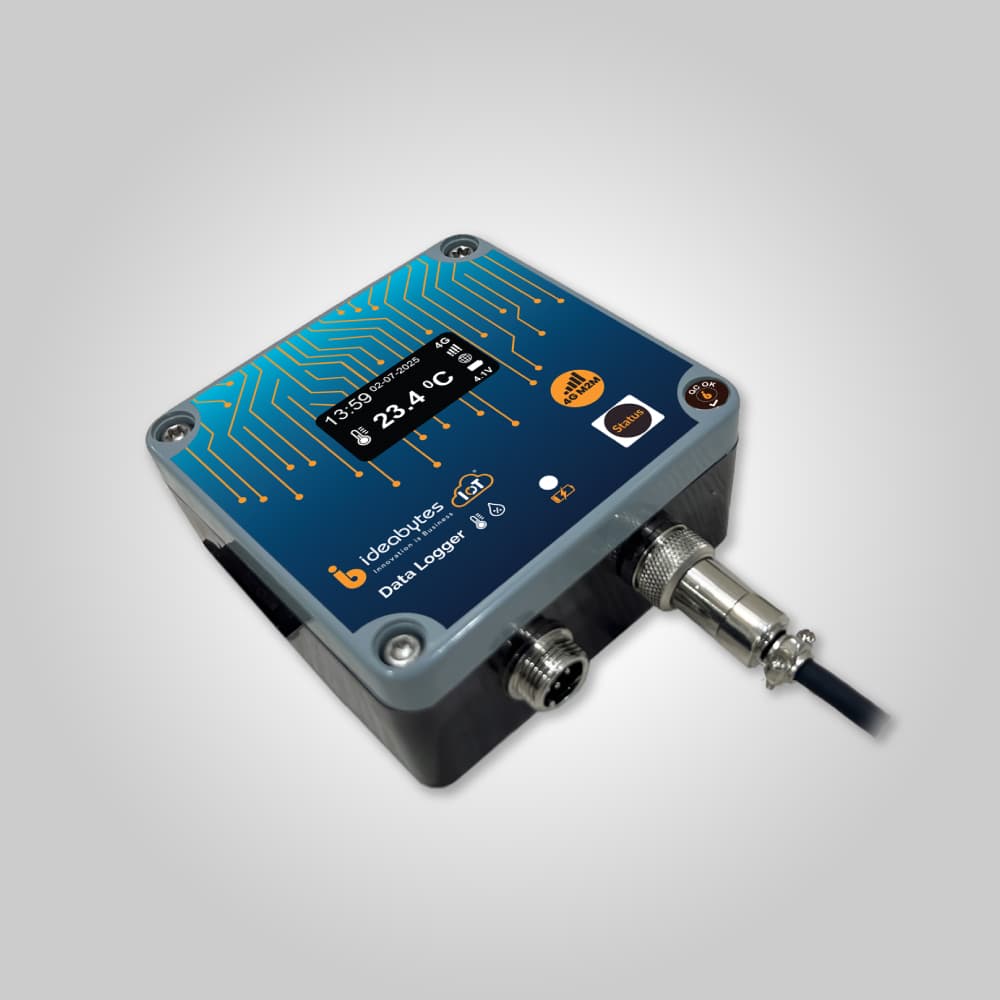
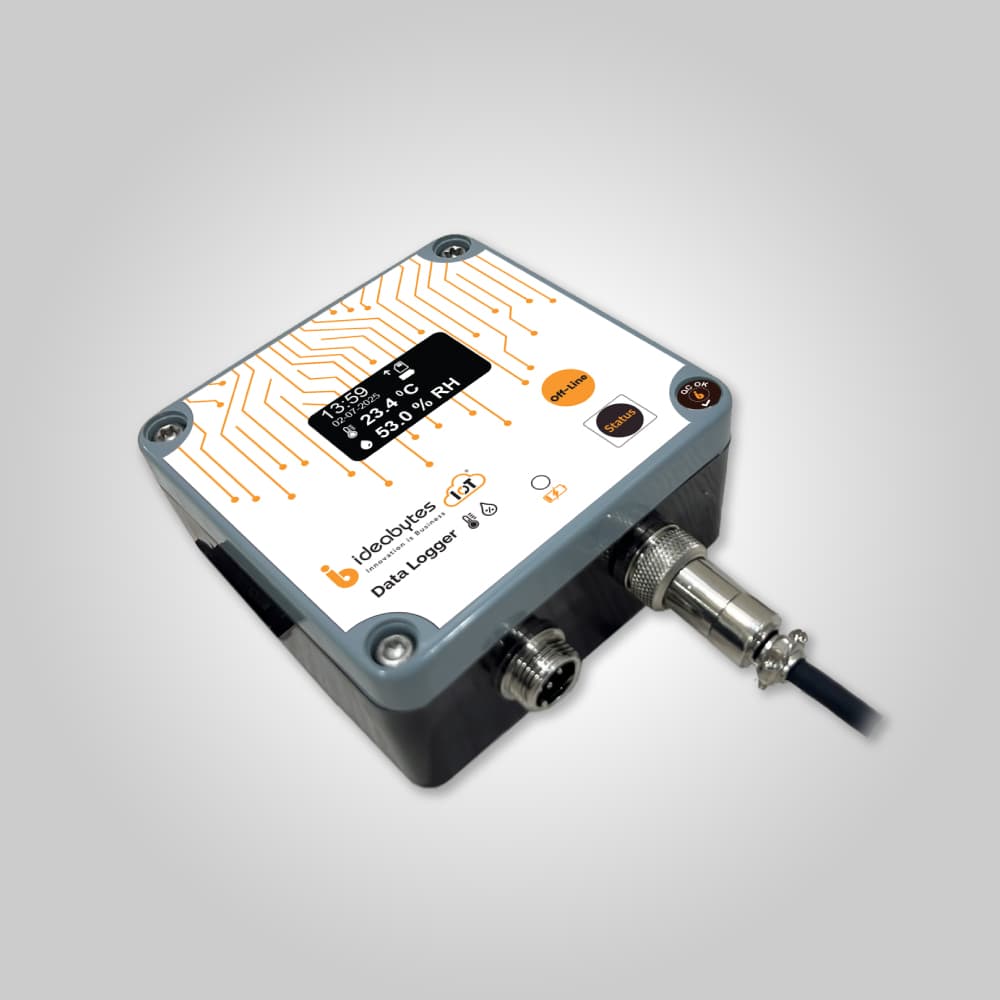
Choose connectivity by site. Wi-Fi models such as the WTH120 suit warehouses with managed Wi-Fi; 4G M2M models such as the MTH120 carry a built-in SIM for sites where IT will not allow devices on the network; Ethernet models such as the ETH120 fit plants with wired IT policies; and offline loggers such as the OTH120 record on board for download over Wi-Fi or USB.
The temperature and humidity models are rated -40 to +120 °C and 0 to 100 % RH, with accuracy of ±0.5 °C (from -10 to +50 °C) and ±2 % RH. For cold rooms and stability chambers with many points, the 8-channel PT100 loggers MTR8 and WTR8 monitor eight probes from one unit, and the MT350 PT100 logger covers freezers and ultra-low units. NABL-traceable calibration certificates are available on request for each logger.
Showing 6 products
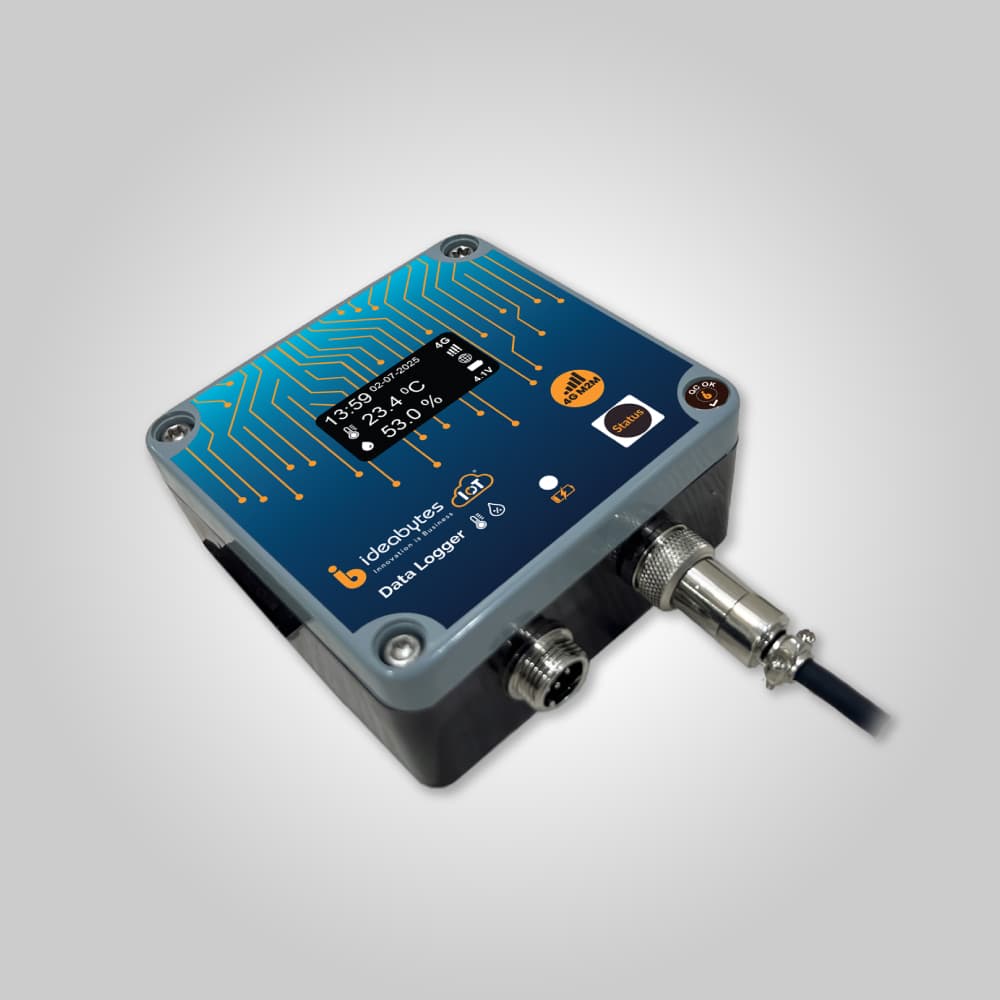
Temperature & Humidity Data Logger
Measuring Range from -40°C to +120°C | Humidity from 0% RH to 100% RH (Condensing)
 Popular
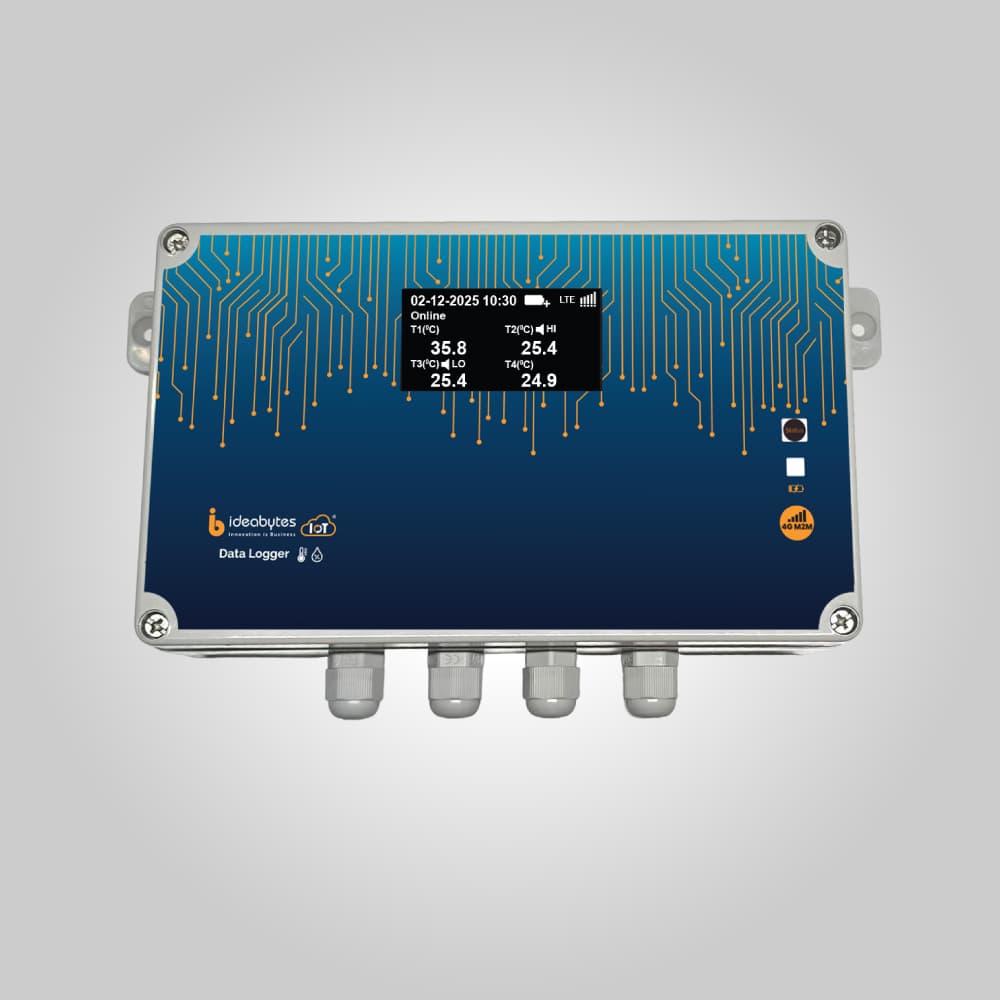
Temperature & Humidity Data Logger
Measuring Range from -40°C to +120°C
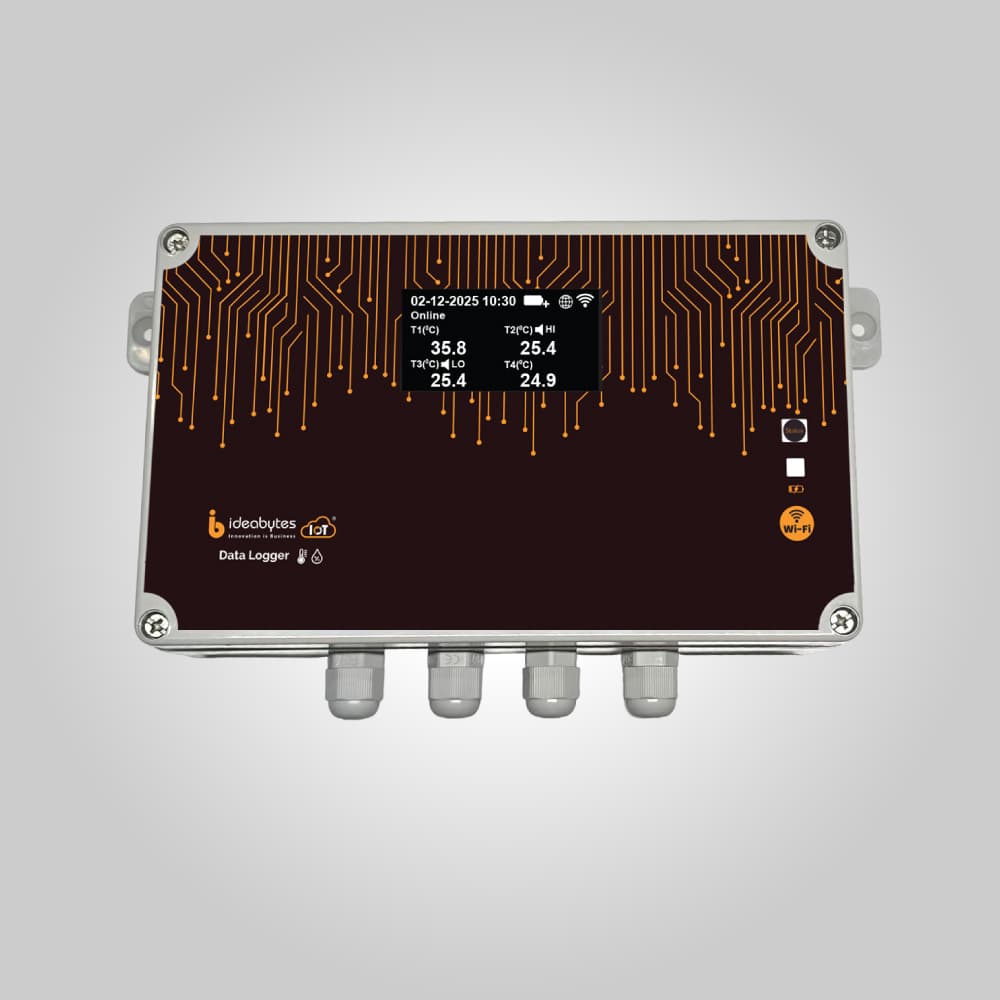
Temperature Data Logger
Measuring Range PT100 : -200°C to 550°C | PT1000 : -200°C to 550°C (Optional). Sensor Probes & Cables need to be procured Seperately
Temperature Data Logger
Measuring Range PT100: -200°C to 550°C | PT1000: -200°C to 550°C (Optional). Sensor Probes & Cables need to be procured Seperately
Temperature Data Logger
Measuring Range from -200°C to +350°C
Temperature & Humidity Data Logger
Ensure accurate and reliable environmental monitoring with our Offline Temperature & Humidity Data Logger
Yes, a template SOP is available on request. It covers mapping, sensor placement, recording interval, alarm limits, excursion handling with MKT, record review and retention, and calibration. Adapt it to your site, storage classes and risk assessment, then approve it through your own document control before use.
Your SOP defines it, based on risk and the product. Continuous monitoring with readings every 5 to 15 minutes is now common practice for GMP and GDP storage because it captures short excursions that twice-daily manual checks miss. Ideabytes loggers record every 15 minutes by default, and the interval is configurable.
The product label and stability data decide. Where a label says "store in a dry place", 60 % RH or below is a widely used limit. Many Indian warehouses set tighter alert limits during the monsoon. Refrigerated and frozen storage usually has no humidity limit, though condensation on cartons should still be controlled.
MKT expresses a fluctuating temperature history as a single equivalent temperature that reflects its effect on product stability. It is used to judge whether an excursion in controlled room temperature storage is likely to have affected the product. Ideabytes reports include MKT values for temperature, so the figure is ready for your impact assessment.
It depends on the number of rooms and monitoring points, whether you need temperature only or temperature and humidity, the connectivity (Wi-Fi, 4G, Ethernet or offline), the probe types, the software plan for alerts and reports, and calibration and validation support. Share your storage layout and we will quote a sized system.
Revised Schedule M was notified in December 2023 with phased compliance dates for larger manufacturers and for MSMEs, and some timelines were later extended as notified. Check the current notification against your licence category. Monitoring, calibration and computerised system validation expectations apply once your date arrives.