
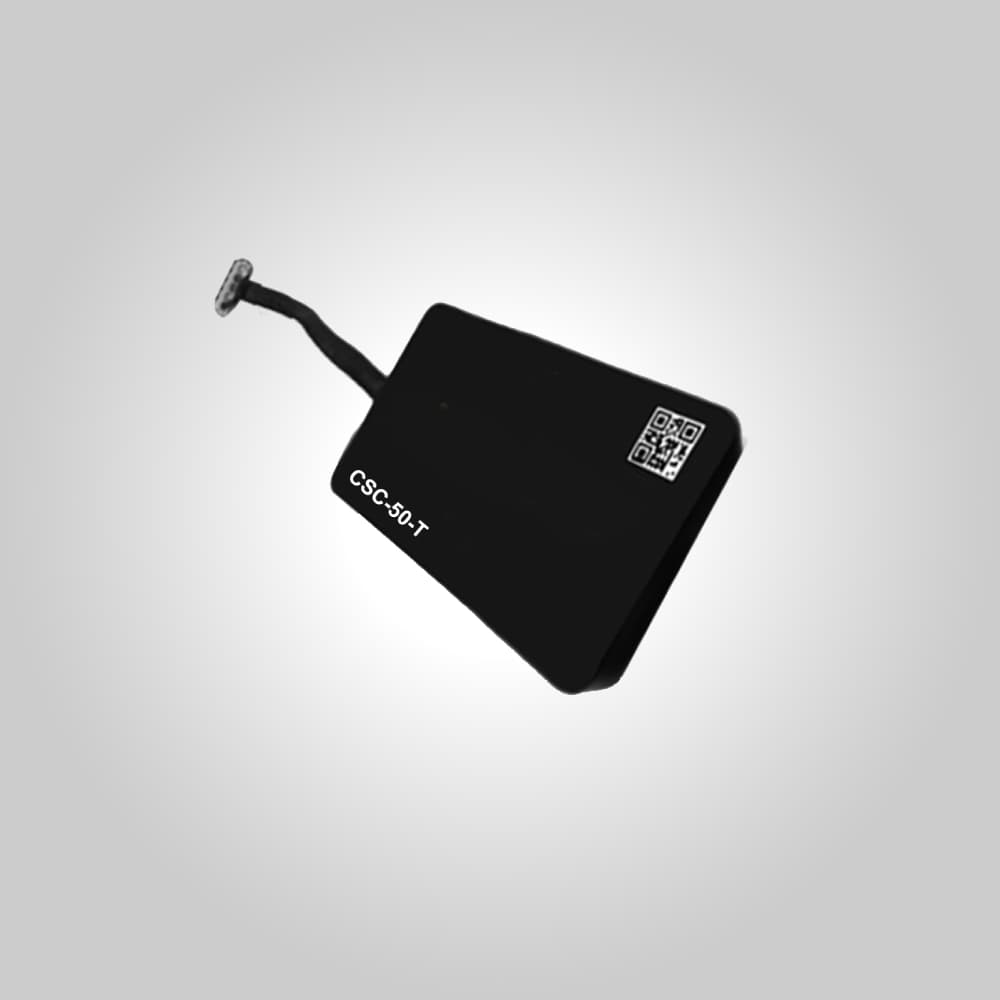
Gateway
IBI-CSC50T | Wi-Fi Dixell Interfacing Gateway
Wi-Fi Dongle for Dixell Controller
- •Maximum of 20 parameters can be monitored based on requirement
- •Custom Reports (21CFR Part 11 Compliant) PDF, CSV, Excel
Temperature monitoring
A cold storage monitoring system continuously records the temperature of cold rooms, walk-in chillers, freezer rooms and multi-chamber cold stores, alerts staff when a chamber drifts out of range and keeps the digital records that food safety and pharmaceutical inspectors ask for. It is used by cold storage operators, food processors, dairies, pharma distributors and C&F agents. Ideabytes IoT supplies 4G and Wi-Fi temperature loggers for each chamber, a Wi-Fi gateway that reads existing Dixell controllers, and MODBUS gateways for plant sensors, all feeding one cloud dashboard with SMS and app alerts and 21 CFR Part 11 compliant reports.
Showing 8 products
Gateway
Wi-Fi Dongle for Dixell Controller
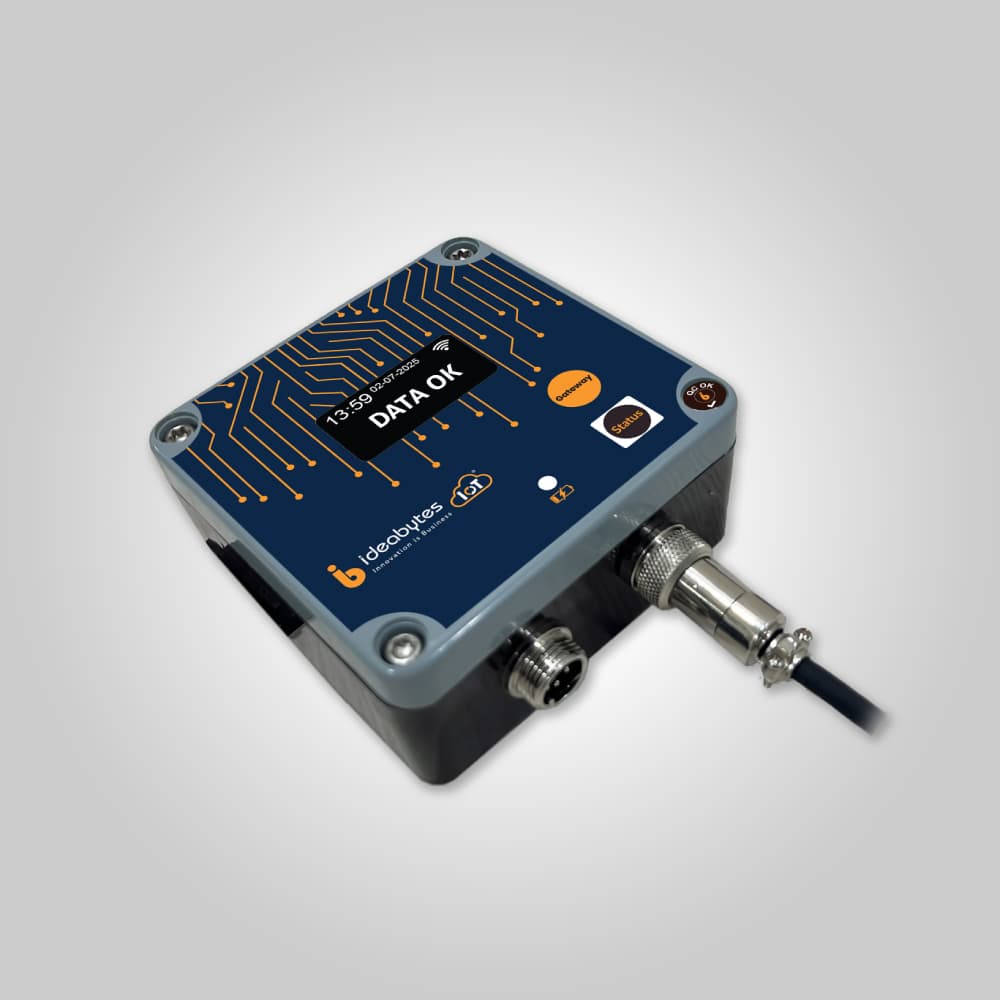
Gateway
8 Default Parameters (Configuration Charges additional)
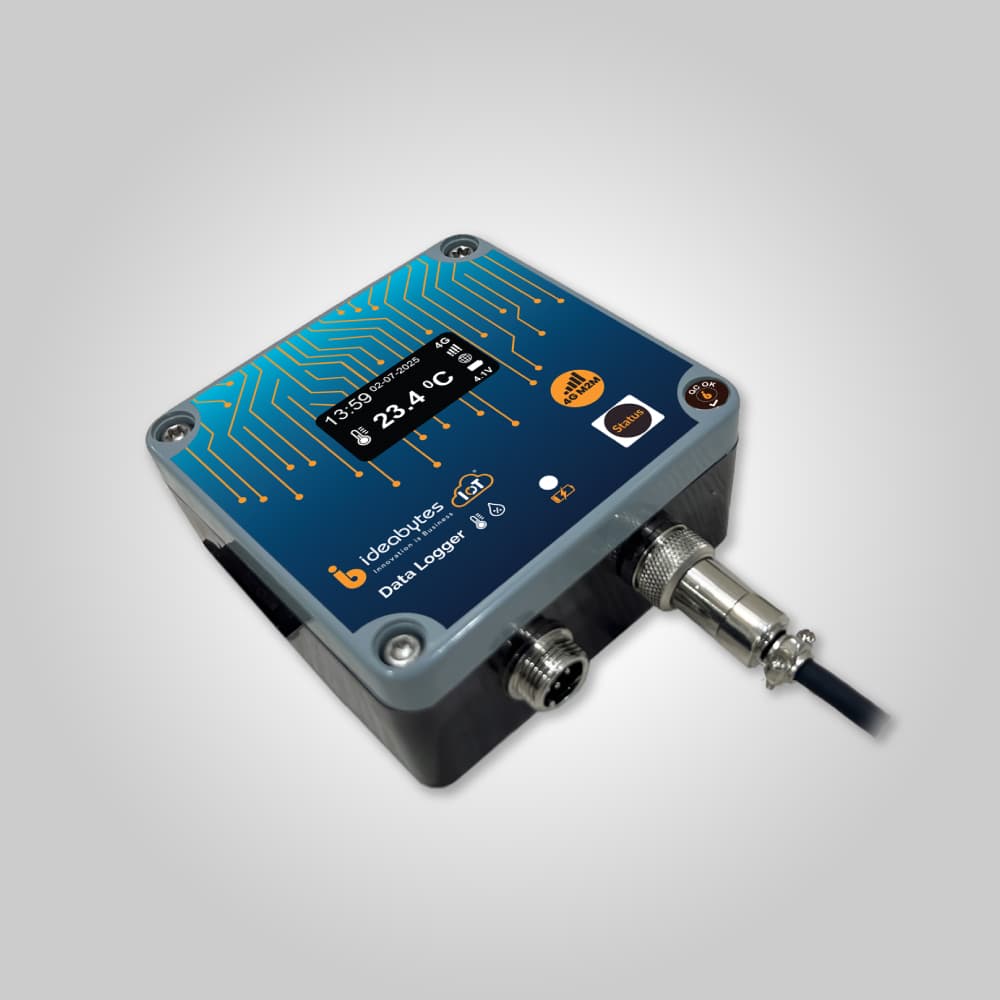
Temperature Data Logger
Measuring Range from -50°C to +120°C
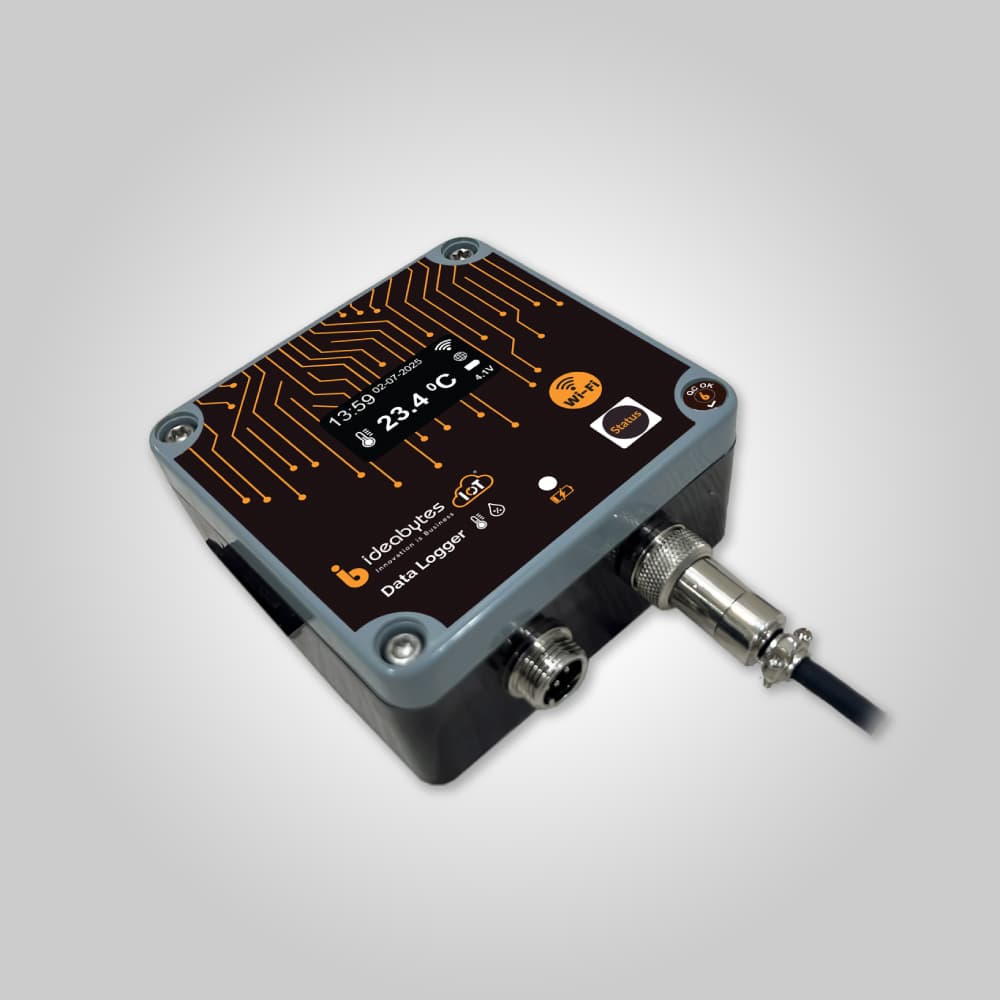 Popular
Temperature Data Logger
Measuring Range from -50°C to +120°C
Temperature Data Logger
Measuring Range from -50°C to +120°C
Temperature Data Logger
Measuring Range from -50°C to +120°C
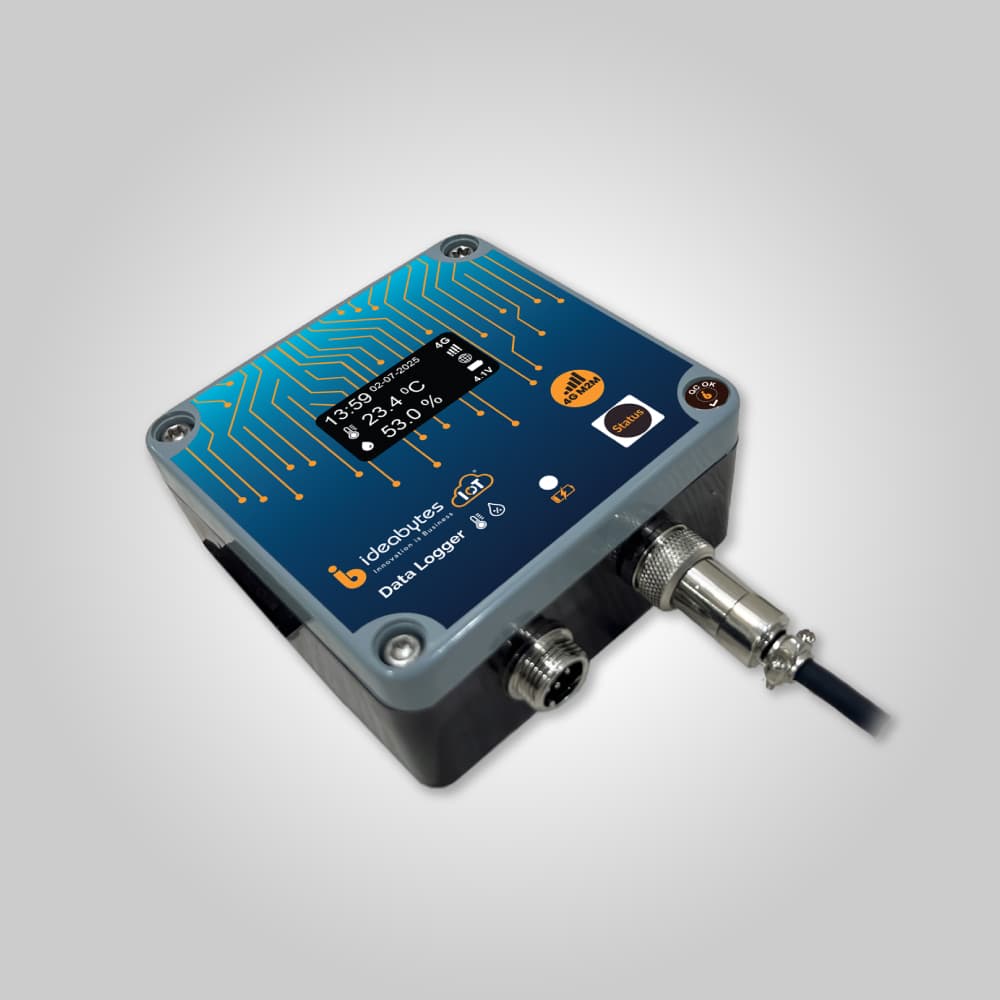 Popular
Temperature & Humidity Data Logger
Measuring Range from -40°C to +120°C
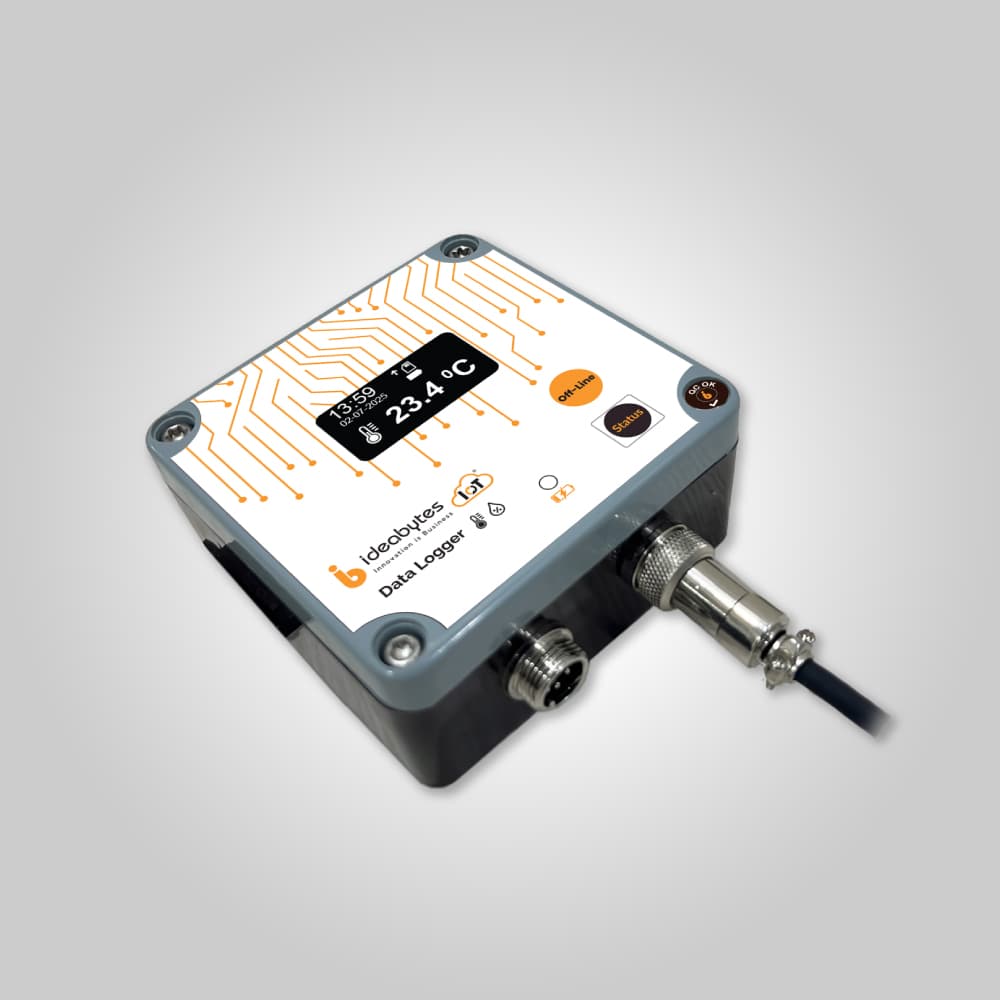
Temperature & Humidity Data Logger
Ensure accurate and reliable environmental monitoring with our Offline Single Channel Temperature Data Logger
Most cold rooms in India are monitored best with 4G loggers. Chambers are built of insulated panels that block Wi-Fi, many cold stores sit on the edge of town with poor site networks, and a logger with its own SIM keeps working when the router or the internet line fails. The IBI-MT120 (single probe, -50 °C to +120 °C) covers chillers, freezer rooms and most blast freezers; the IBI-MTD120 dual-channel logger monitors two chambers or a chamber and its ante-room from one unit. The IBI-MTH120 adds humidity for fruit, vegetable and seed stores where RH matters as much as temperature.
Where the building has reliable Wi-Fi, the IBI-WT120 and IBI-WTD120 do the same job at a lower running cost. For a small store without any network, an offline logger such as the IBI-OT120 records data for manual download, though it cannot send alerts.
Many Indian cold rooms already have a Dixell controller on the door panel. The IBI-CSC50T Wi-Fi Dixell interfacing gateway connects to that controller and sends its readings to the Ideabytes cloud, so you get remote monitoring, alarms and 21 CFR Part 11 compliant reports without adding new probes. It can monitor up to 20 parameters based on requirement and stores up to 30 days of data if Wi-Fi or the internet fails.
For plants with other RS485 MODBUS RTU controllers, energy meters or sensors, the IBI-CSC50R (Wi-Fi) and IBI-CSC50RM (4G) gateways communicate with up to 15 MODBUS devices and up to 30 parameters. Retrofitting a gateway is often the fastest route to a cold room monitoring system in an older facility.
A small walk-in chiller usually needs one probe placed at its warmest point. Larger chambers need more: a common starting point is one probe near the door, one at the top of the highest rack and one near the back wall, then adjusting after a temperature mapping study shows where the hot and cold spots really are. Multi-chamber cold stores normally use one logger per chamber so that an alert names the exact room.
Keep probes away from the evaporator outlet, where air is always coldest and gives a false sense of security, and route probe cables through the door gasket or a sealed gland so the door still closes tightly.
Each chamber gets its own high and low limits. A chiller at 2 °C to 8 °C and a frozen store at -18 °C or below need different limits, and a ripening room needs a humidity limit as well. Alerts go out by SMS and app push notification to the people you list, and every alert is written to the alarm log with its acknowledgement and corrective action.
Decide in advance who is called first: the night operator, then the maintenance technician, then the manager. Include power failure in the SOP, because in India a DG set that fails to start is one of the most common causes of cold storage losses. Connected loggers carry a rechargeable battery for up to 20 hours of backup and keep logging through the outage.
Food businesses licensed by FSSAI must control and record the temperature of chilled and frozen storage as part of their food safety management system, and a HACCP plan usually treats cold storage as a critical control point with defined limits, monitoring and corrective action. Pharmaceutical cold stores and distributors follow WHO GDP principles and CDSCO good distribution practice guidance, which expect continuous monitoring, alarm response and retained records.
The Ideabytes platform provides daily and on-demand PDF reports, trend graphs, alarm logs, MKT values and an audit trail. That gives an auditor the complete temperature history of every chamber, not a logbook page with a single reading per shift.
Indian cold storage covers a wide spread of sites: large multi-commodity stores for potatoes, fruit and spices, dairy and ice cream plants, frozen food and meat processors, supermarket back rooms, and pharmaceutical C&F agents holding 2 °C to 8 °C stock for a region. Summer ambient temperatures above 40 °C, frequent grid fluctuation and long refrigeration runs put more strain on compressors than in temperate countries, so failures are more frequent and develop faster.
Operators with several sites benefit most from a single cloud dashboard: every chamber in every city on one screen, the same alarm rules everywhere and one set of reports for head office and for customers who ask for proof of storage conditions.
The cost depends on the number of chambers, whether you add new probes or read existing Dixell or MODBUS controllers through a gateway, the choice of 4G or Wi-Fi, whether humidity is measured, the software plan and calibration requirements. A gateway can be cheaper than individual loggers when many controllers sit in one plant room. Ideabytes IoT is registered on GeM and manufactures in India; share your chamber list for a quotation.
It is a set of connected temperature loggers or controller gateways that record each cold room continuously, send the data to a cloud dashboard and raise SMS and app alerts when a chamber goes out of range. It replaces handwritten logbooks with an audit-ready record for FSSAI, HACCP, GDP and customer audits.
Yes. The IBI-CSC50T Wi-Fi Dixell interfacing gateway reads the controller and sends its values to the Ideabytes cloud for remote viewing, alarms and 21 CFR Part 11 compliant reports. It monitors up to 20 parameters and buffers up to 30 days of data if Wi-Fi fails. Other MODBUS RTU controllers connect through the CSC50R or CSC50RM gateway.
We usually recommend 4G for cold rooms. Insulated panels weaken Wi-Fi, many cold stores have unreliable networks, and a 4G logger with a built-in M2M SIM keeps sending data and alerts when the site router or broadband is down. Wi-Fi loggers work well in facilities with strong, stable coverage near each chamber.
Place it at the warmest location that product is exposed to, typically near the door and at the top of the stack, and away from the evaporator outlet. Large chambers need more than one probe; a temperature mapping study is the reliable way to find hot and cold spots before fixing permanent positions.
It depends on the number of chambers and probes, 4G or Wi-Fi connectivity, whether you add new loggers or read existing Dixell or MODBUS controllers through a gateway, humidity monitoring, the software plan and calibration. Send us your chamber list and set points and we will prepare a quotation.
Yes. Continuous records, alarm logs with corrective actions and scheduled PDF reports cover the temperature monitoring part of an FSSAI food safety management system and a HACCP plan. Calibration certificates are available on request, and government buyers can procure through GeM.