
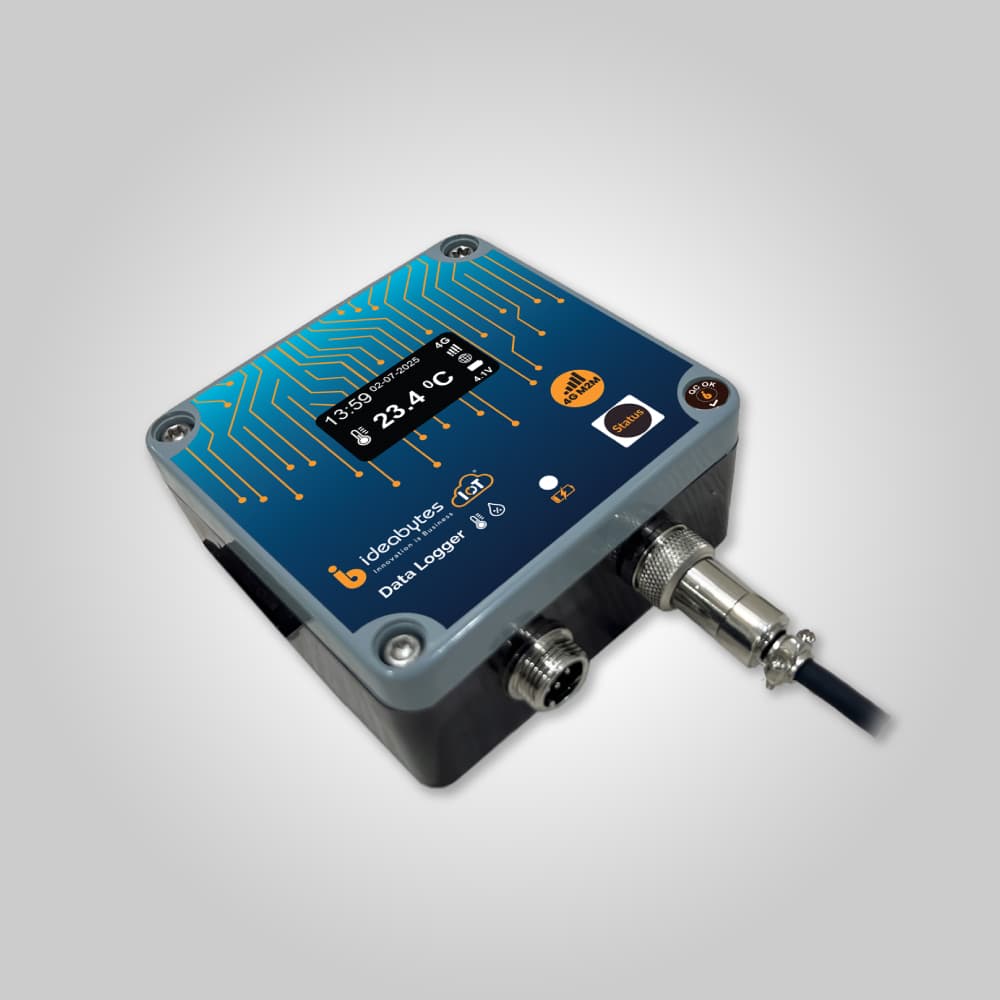
Temperature Data Logger
IBI-MT70 | 4G M2M GPS Temperature Data Logger
Measuring Range from -30°C to +70°C
- •4G LTE Cat-M1 / GPS Connectivity
Our IoT-enabled cold chain solutions safeguard pharmaceuticals, biologics, vaccines, and perishable goods during storage and transit, ensuring compliance, minimizing spoilage, and maintaining product quality.
Ensure complete cold chain integrity with IoT-enabled monitoring solutions. Real-time visibility, automated alerts, and predictive analytics safeguard temperature-sensitive products, reduce spoilage, ensure regulatory compliance, and optimize operational efficiency across storage and transportation.
Maintaining consistent temperature for pharmaceuticals, biologics, vaccines, and perishable goods is critical. Even minor deviations can compromise product quality and safety.
Limited tracking of shipments and storage conditions delays corrective actions. Disconnected monitoring systems make it difficult to ensure end-to-end cold chain integrity.
Strict compliance requirements (WHO, GDP, FDA) demand accurate records and traceability. Manual documentation increases the risk of audit failures.
Breaks in the cold chain lead to costly wastage of sensitive products. Delayed corrective actions amplify financial and reputational risks.
Don't see your specific use case? We can customize a solution for you.
Discuss Your RequirementsRequest a personalized demo tailored to your specific requirements
Ensures product integrity during storage and transit.
Enables immediate corrective actions to prevent spoilage.
Provides complete visibility across multiple facilities and fleets.
Reduces equipment downtime and operational disruptions.
Simplifies regulatory audits and ensures traceability.
Ensures end-to-end cold chain visibility and shipment security.
Electronic records and signatures compliance
Quality management systems certification
Good Manufacturing Practice compliance
Hazard Analysis and Critical Control Points
Certified and Validated by:
Logistics
A multinational vaccine distributor faced temperature excursions during transport, risking product spoilage and regulatory non-compliance.
IoT-enabled sensors were deployed across transport vehicles and warehouses, with real-time alerts and centralized monitoring.
Trusted by leading pharmaceutical companies worldwide
A cold chain is only as strong as its weakest handover. It helps to split it into three stages, each with its own risk and its own logger: storage (cold rooms, freezers and depots), transit (reefer trucks, vans and shipper boxes) and receiving (the dock where incoming goods are accepted or quarantined). One device rarely suits all three, and choosing per stage is usually cheaper and more reliable than forcing a single model everywhere.
Fixed rooms need an always-on logger with alerts. The 4G MT120 family carries a built-in M2M SIM, so it works in a depot with no Wi-Fi and keeps sending when the site network is down. For ultra-low freezers and liquid nitrogen storage, the MT350 uses a PT100 probe rated from -200°C to +350°C. Where a depot already runs Dixell refrigeration controllers, the CSC50T gateway reads those controllers over Wi-Fi and brings them into the same dashboard without replacing any hardware.
If you own or contract the vehicles, fit a 4G GPS logger such as the MT70, MT120-CN or MTH120-CN. These report temperature and location together, so a dispatcher sees a rising reading and the truck position at the same moment and can act before the load is lost. For shipments that leave your control, such as courier boxes, air freight or third-party trucks, a low-cost single-trip device makes more sense. The UT70 USB logger produces an encrypted PDF report when plugged into any computer, and the BTH70 Bluetooth logger can be read from a phone at the door without opening the box.
The receiving dock is where disputes are settled. A handover report showing the full trip, the minimum and maximum, and any time outside limits lets the stores team accept, reject or quarantine a consignment on evidence rather than on a hand-held reading taken at the tailgate. Keep these reports with the goods receipt note so the record survives the next audit.
Set acceptance rules in advance, for example the maximum cumulative time above 8°C that a product may tolerate according to its stability data, so the dock team is not left to judge each excursion on the spot. The same report, shared with the carrier, also settles who is responsible when a load arrives warm.
Summer ambient temperatures above 40°C, long loading halts, power cuts at depots and patchy coverage on some highways all stress a cold chain. Loggers that buffer readings and resend once the signal returns avoid gaps in the record. For food operators, FSSAI licence conditions expect cold storage and transport temperatures to be maintained and documented; for medicines, Good Distribution Practice expects the same with traceable, tamper-evident records. Reports from Ideabytes loggers are 21 CFR Part 11 compliant and can be exported as PDF, CSV or Excel for either audit.
Showing 6 products
Temperature Data Logger
Measuring Range from -30°C to +70°C
Temperature & GPS Data Logger
Measuring Range Upto +120°C
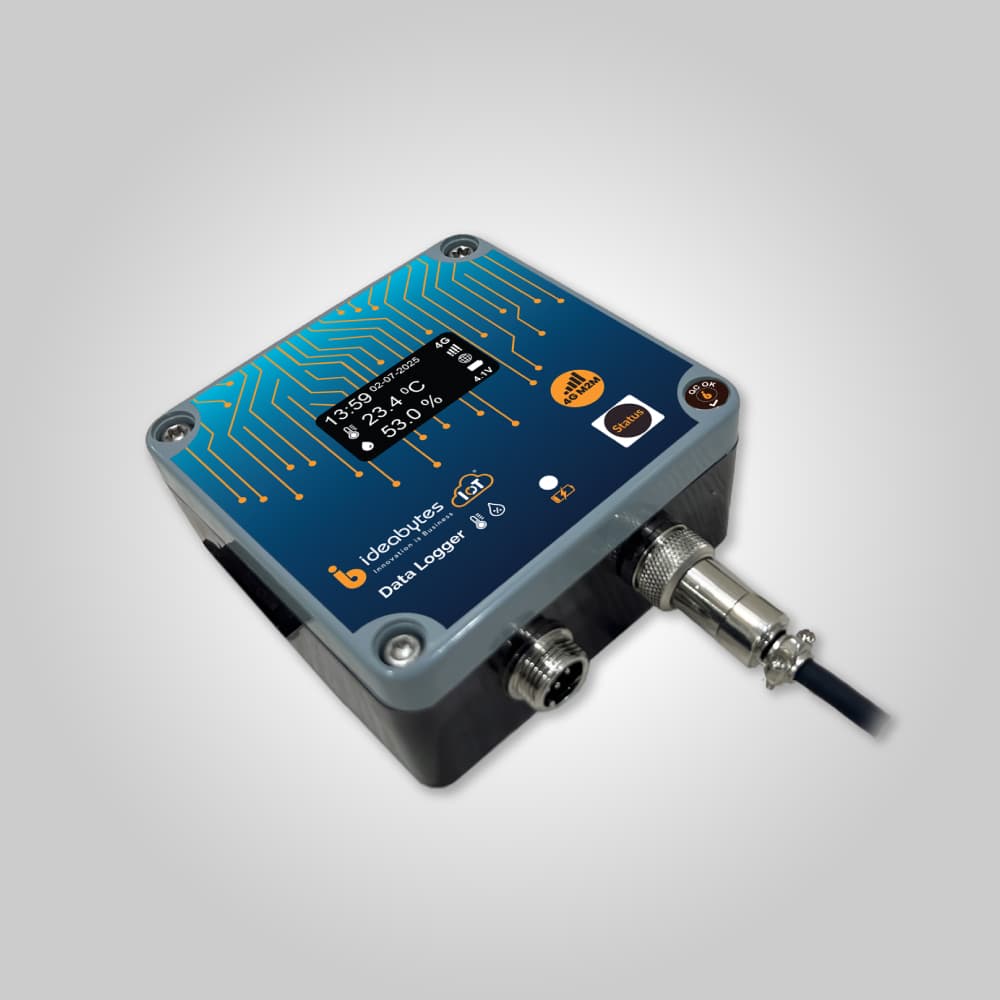
Temperature Humidity & GPS Data Logger
Measuring Range Upto +120°C
Temperature Data Logger
Measuring Range from -200°C to +350°C
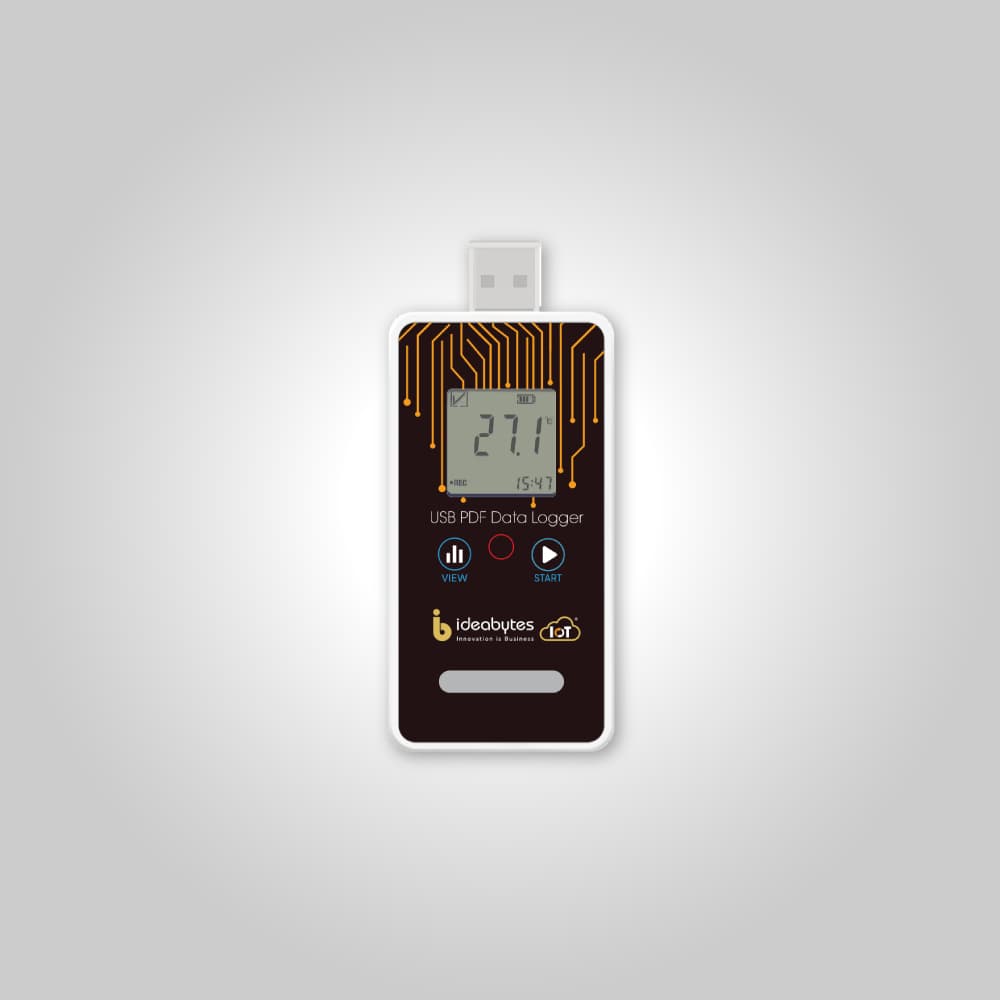
Temperature Data Logger
Measuring Range from -30°C to +70°C
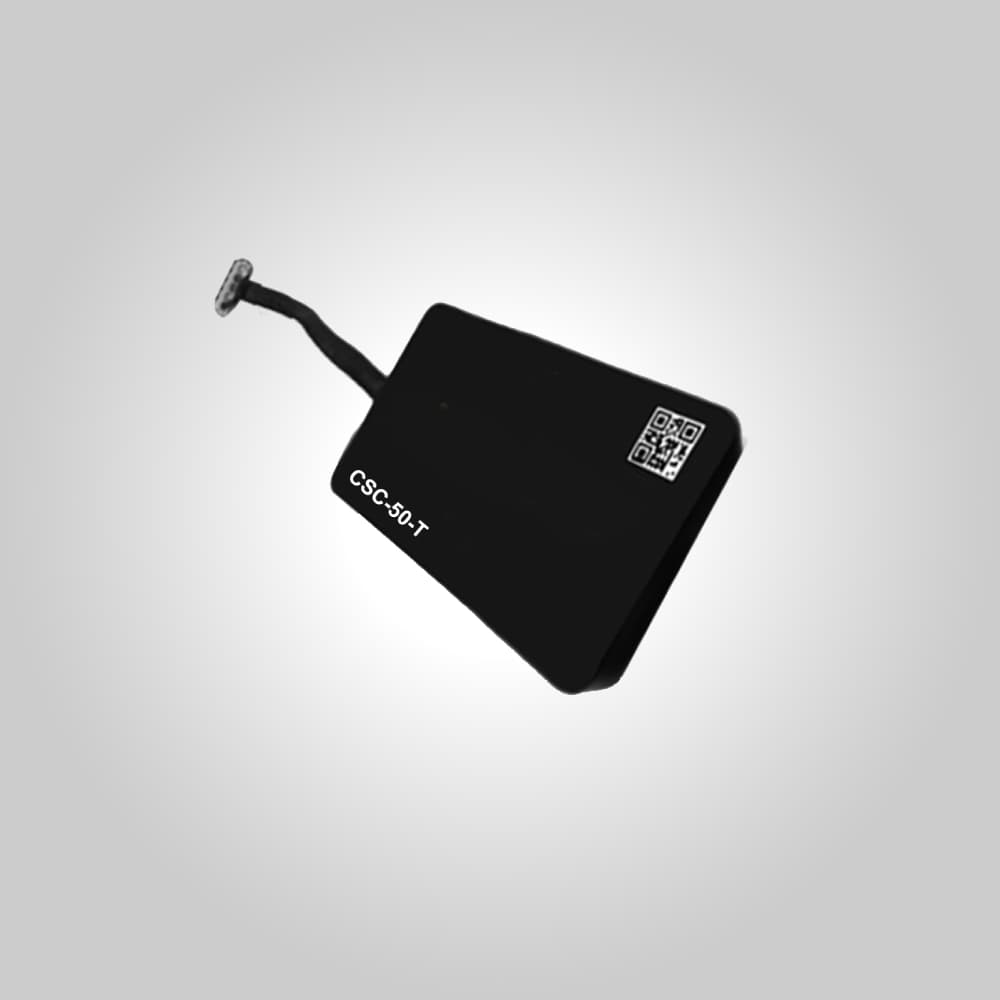
Gateway
Wi-Fi Dongle for Dixell Controller
For shipments that leave your control, use a compact single-trip device. The UT70 USB logger records for up to 90 days at a 10-minute interval and creates an encrypted PDF report when plugged into a computer, with no software to install. The BTH70 Bluetooth logger lets the receiver read the data on a phone before opening the box.
Only in transit. GPS adds value on vehicles you own or contract, because the alert tells the dispatcher where the truck is when the temperature rises and the report proves the route. In a fixed cold room, GPS adds cost without benefit, so a 4G or Wi-Fi logger without GPS is the right choice.
The logger keeps recording to its on-board memory while out of coverage and uploads the stored readings when the network returns, so the trip record stays complete. Check the memory capacity against your longest dead zone at the recording interval you choose; our team can help set this up for your routes.
It depends on how many rooms and vehicles you monitor, whether you need GPS, the probe range and whether shipments use reusable or single-trip devices. Tell us your storage points, fleet size and lanes through the contact form and we will recommend a mix and send a quote.
Get started with our comprehensive IoT monitoring solutions today